
Strategy · M&A, Partnerships and Market Entry
If this is on your desk right now, EDON offers a free 30-minute sparring session, with no obligation.
Book 30 minutes (opens in a new tab)
From 1 October 2026, Emirates flies daily between Dubai and Helsinki (opens in a new tab), a route it calls the only year-round direct link between Finland and the UAE. That route is the reason for this piece. For Middle East owners, market entry into Finland turns on three choices to settle before committing capital: the entry mode, the first customer segment and the partner.
Registering a company in Finland takes days. Winning the first Finnish customer takes months.
A companion piece on entering the UAE market from Finland will follow.
The rules for doing business in Finland are clear. Business Finland lists nine steps to set up a company, with no minimum share capital and a flat 20% corporate income tax, and says registration can take as little as one to three business days (Business Finland (opens in a new tab)). The Finnish Patent and Registration Office (PRH) works in order of arrival; on 21 September 2026 it was processing online filings made on 10 September (PRH (opens in a new tab)). A proposal to cut the tax rate to 18% from tax year 2027 is before Parliament, so treat it as planned, not law (Vero (opens in a new tab)).
Two official points are easy to miss. A managing director living outside the European Economic Area (EEA) needs a permit from PRH, as does every ordinary board member unless at least one lives in the EEA (PRH (opens in a new tab)). A founder who moves to Finland applies for an entrepreneur's residence permit, decided first by the Economic Development Centre and then by the Finnish Immigration Service (Migri (opens in a new tab)).
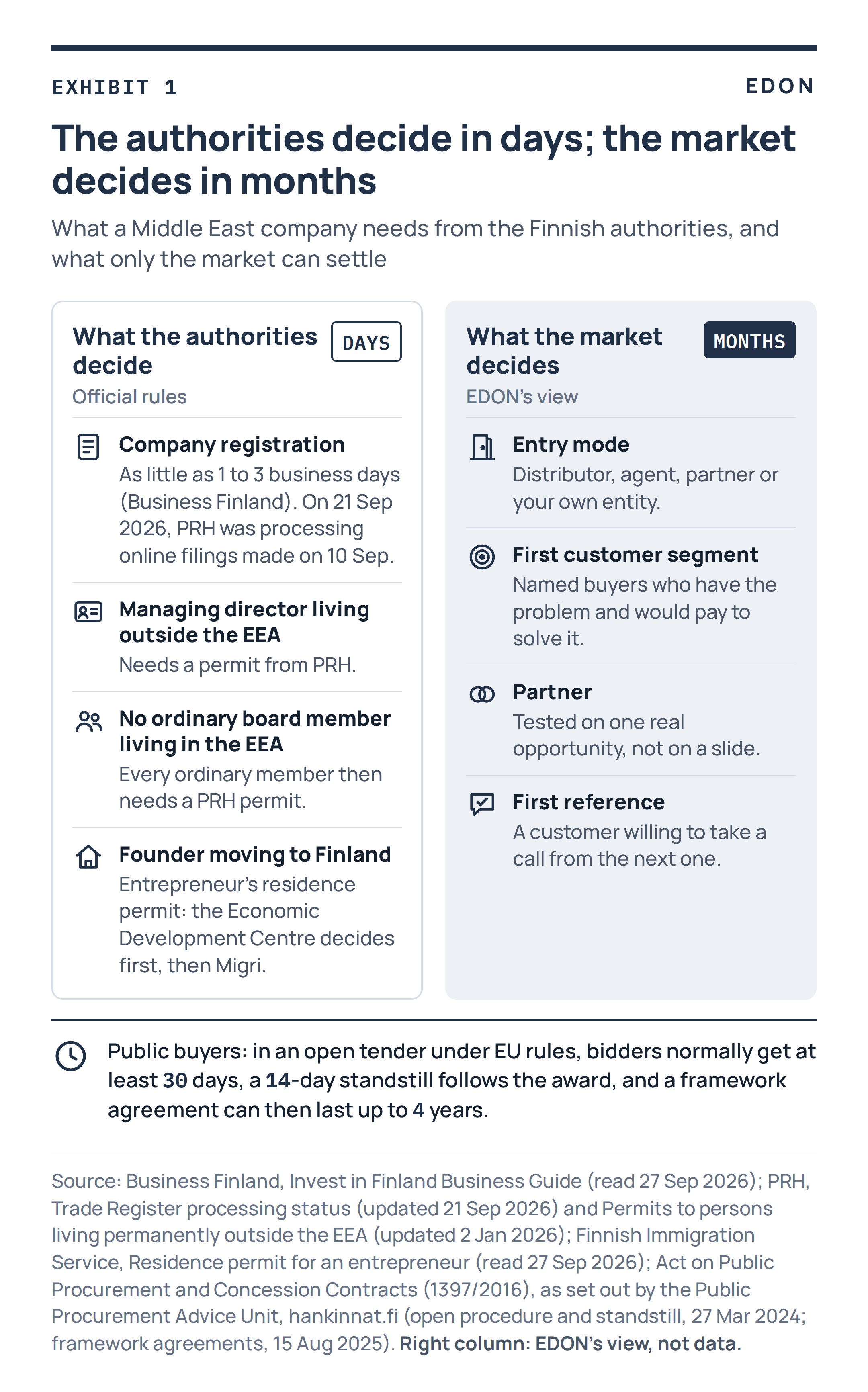
Exhibit 1. The authorities decide in days; the market decides in months
A daily direct flight makes it easier to meet Finnish buyers in person, and Finns prefer to deal with people they know and trust (trade.gov (opens in a new tab)). Finnish Customs' preliminary figures showed exports to the Middle East growing in 2025, particularly to the United Arab Emirates and Saudi Arabia (Yle (opens in a new tab)). The corridor is still thin. Finland's exports to the UAE were EUR 489 million in 2024, about 0.68% of its total, and around 70 Finnish companies operate there (Ministry for Foreign Affairs of Finland (opens in a new tab)).
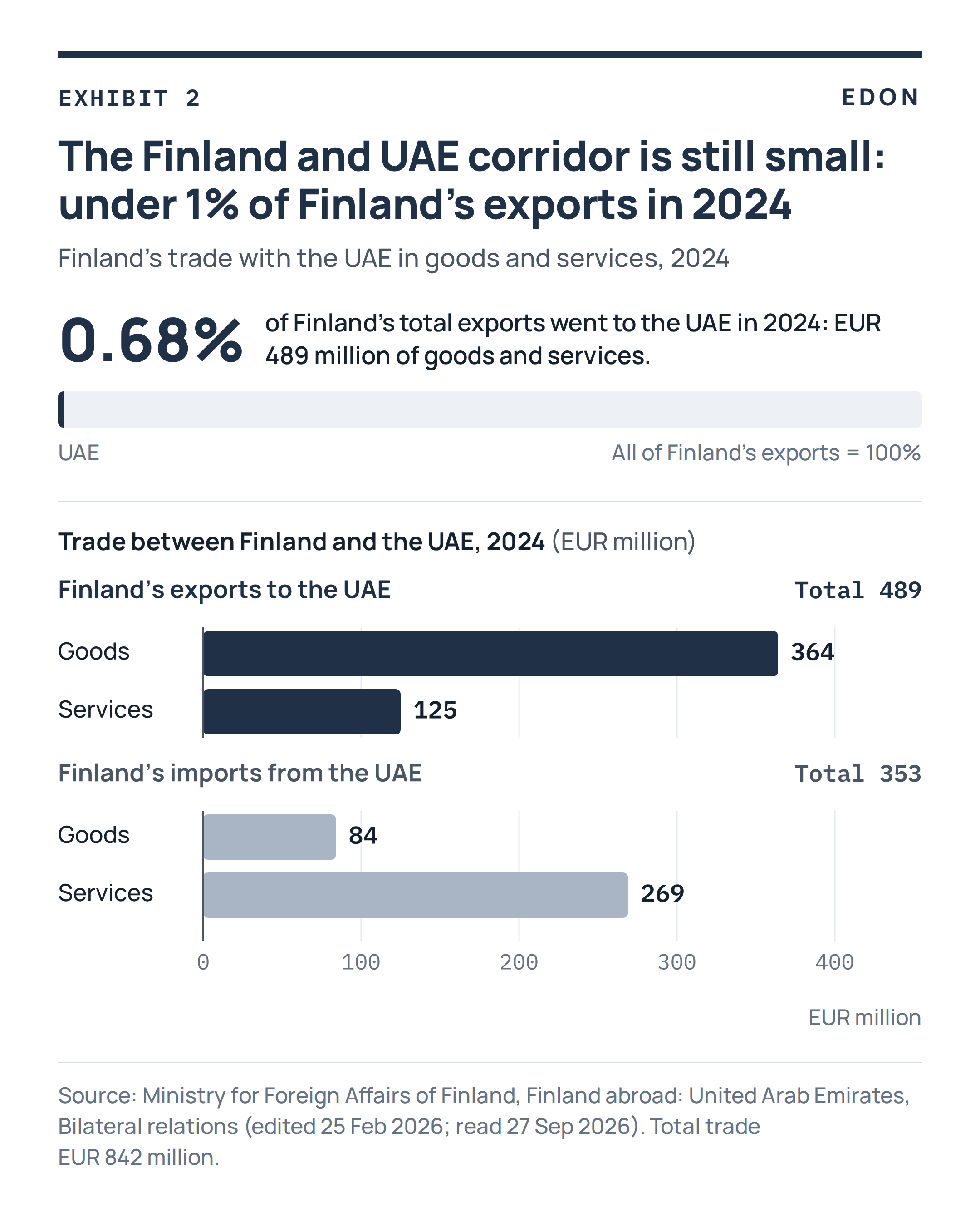
Exhibit 2. The Finland and UAE corridor is still small: under 1% of Finland's exports in 2024
Being early helps and hurts. Among the 5,685 foreign-owned enterprises in Finland in 2024, those from Sweden, the United States, Germany, Jersey and Denmark employed the most people (Statistics Finland (opens in a new tab)). A company from the Middle East will stand out, and will find few intermediaries who know both markets.
For the partner search, EDON suggests starting with Finnish firms that already sell to your buyers, before firms that know your region. Such a firm is already inside the buyers' network, and research on internationalisation places a newcomer's main uncertainty in being outside it (Johanson and Vahlne, 2009 (opens in a new tab)). This holds when your product complements the firm's own. It fails when the firm sells a competing line, as qualified Finnish agents often do (trade.gov (opens in a new tab)); then a firm that knows your region, or a direct approach, may serve you better.
Slowly, and then for a long time. EDON sees the pattern often: a Finnish purchasing decision takes months, and the partnership that follows tends to last for years. Verbal agreements and promises are treated as binding (trade.gov (opens in a new tab)), and the official Work in Finland service states the norm: "Say what you mean and do what you promise" (Work in Finland (opens in a new tab)).
For public buyers, the law sets the pace. In an open public tender under EU rules, bidders normally get at least 30 days, a 14-day standstill follows the award, and a framework agreement can then run for up to four years (hankinnat.fi (opens in a new tab)). Buyers may also ask for a list of your main deliveries over the past three years (hankinnat.fi (opens in a new tab)), which a newcomer will struggle to show. Relationships count here too, but they rest on proof and kept promises, so the price and commitments in your offer need to hold.
It depends on the size of the company. The four common routes differ in how much control you keep and how much you commit before the first sale.
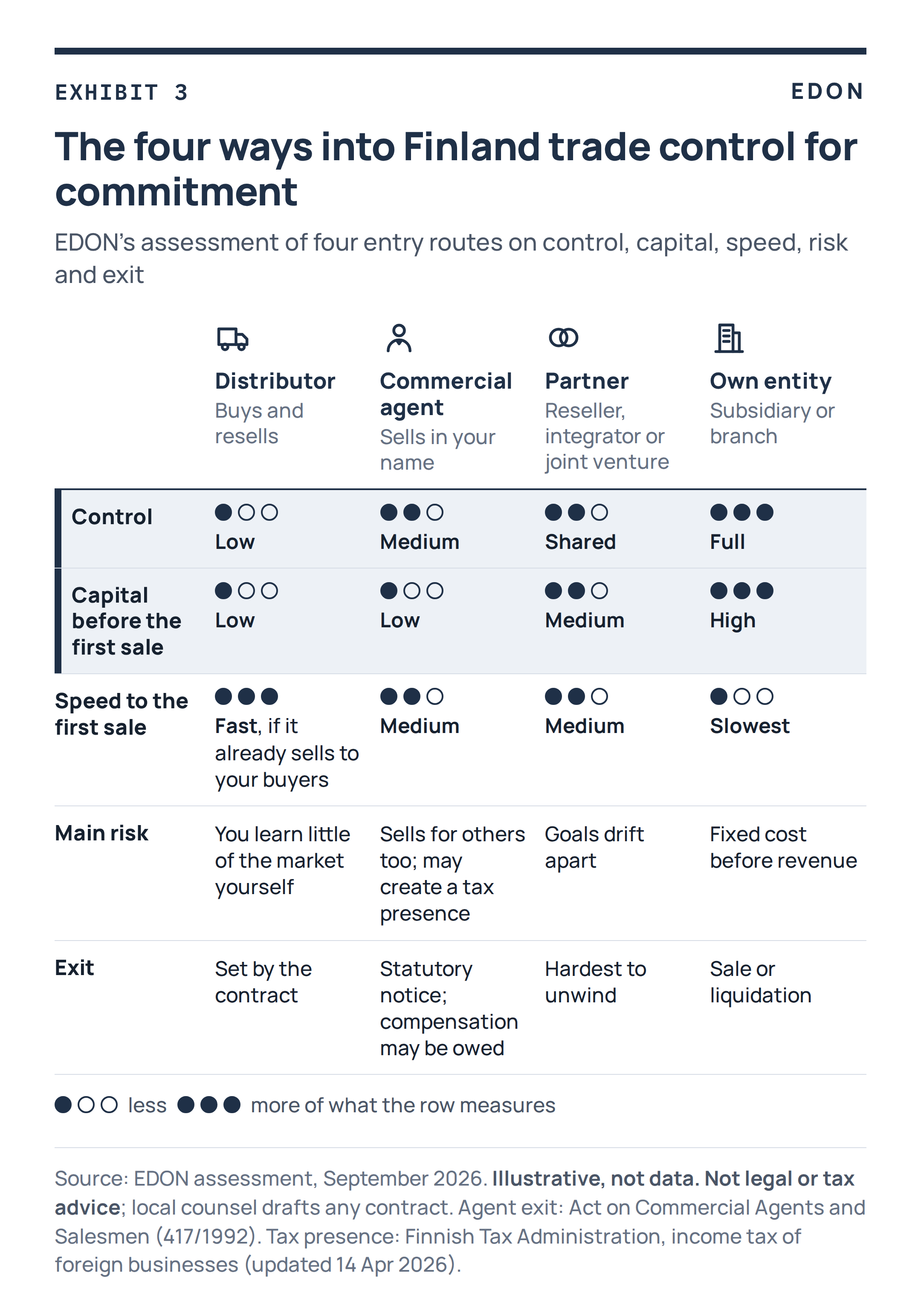
Exhibit 3. The four ways into Finland trade control for commitment
For a smaller company, EDON suggests entering through an agent or a partner and opening an entity after the first reference customers; it is often the lower-risk route. Fixed costs stay low while the company learns the market, the gradual commitment that the Uppsala model of internationalisation describes (Johanson and Vahlne, 1977 (opens in a new tab)). It is not a rule. Larger companies with capital and a clear pipeline may set up their own entity earlier; research finds that larger, more multinational firms are more likely to invest directly, and to prefer wholly owned ventures when they do (Agarwal and Ramaswami, 1992 (opens in a new tab)).
If you are weighing an agent against a partner right now, book a free 30-minute sparring session with EDON (opens in a new tab) and bring the names you are talking to.
Proof before entity is the sequence in which a foreign company proves the buyer's problem, the partner and the first reference before it opens its own Finnish entity. EDON suggests it for most business-to-business entries; larger companies with capital may run the steps in parallel.
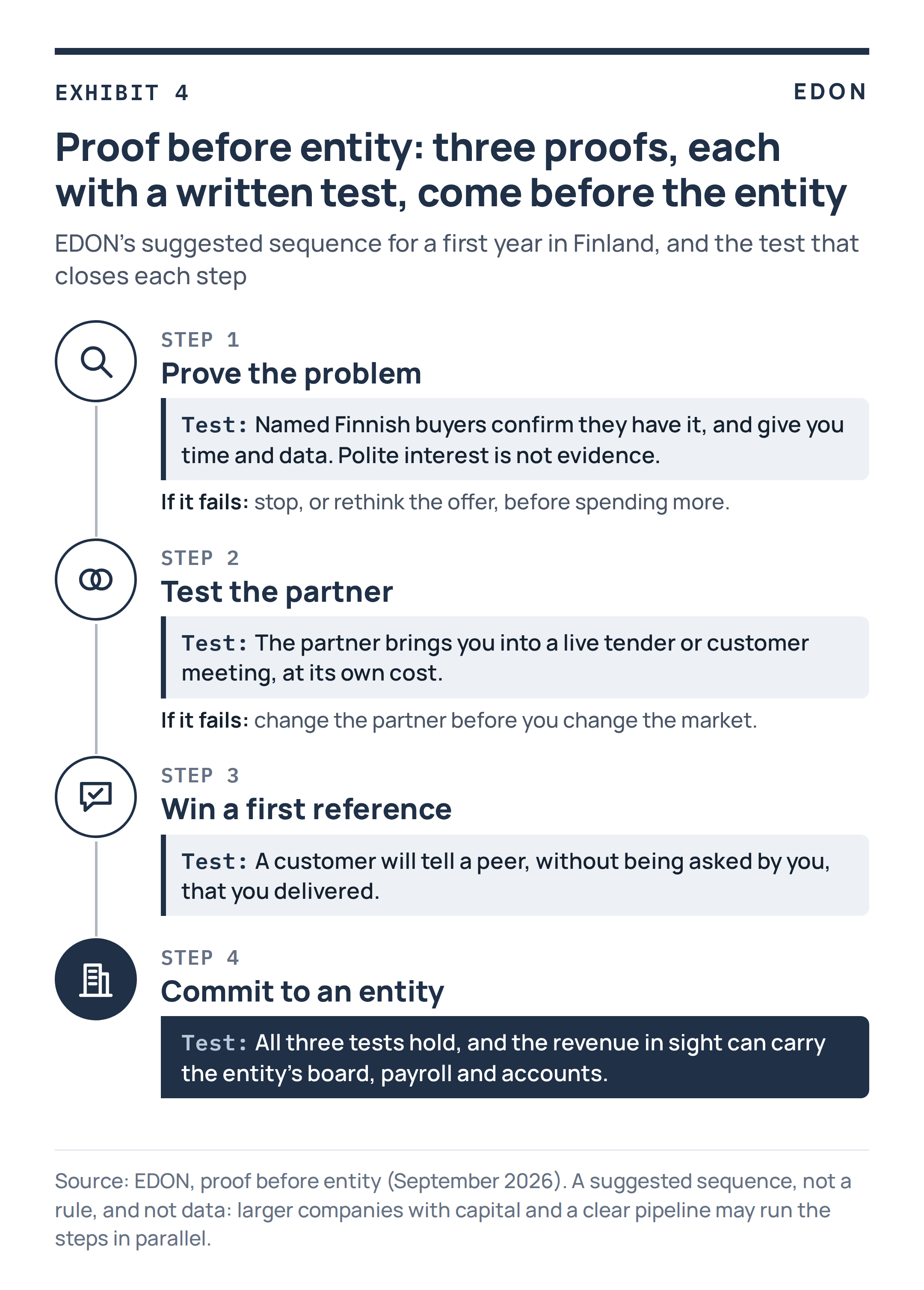
Exhibit 4. Proof before entity: three proofs, each with a written test, come before the entity
Writing each test down in advance keeps the steps honest. Buyers who really have the problem give you time and data; polite interest is not evidence. A committed partner brings you into a live tender or customer meeting at its own cost. A real reference will tell a peer, unprompted, that you delivered. When all three hold, the entity's fixed cost of board, payroll and accounts is far easier to earn. If step one fails, stopping or rethinking the offer is usually wiser than pushing on; if step two fails, it is usually better to change the partner than the market. Finding the first customers is a go-to-market question as much as an entry question (go-to-market).
The first mistake, common in EDON's experience, is underestimating the differences in culture and living standards between the Middle East and Finland. Finnish workplaces are flat and everyone is expected to voice an opinion (Work in Finland (opens in a new tab)), so a pitch aimed only at the most senior person can miss the specialists who shape the decision. Universally binding collective agreements set minimum pay, hours and time off in their sectors, even for employers outside employers' organisations (Occupational Safety and Health Administration (opens in a new tab)), and four to six weeks of holiday a year, much of it in summer, is typical (Work in Finland (opens in a new tab)). Budgets built on home-market pay, and sales plans that ignore the summer, run short.
The second is assuming an agent keeps you out of Finnish tax. A dependent agent who can enter into contracts or receive orders for you may create a permanent establishment, and the income attributable to it is then taxable in Finland unless a tax treaty limits that (Vero (opens in a new tab)). EDON suggests settling the agent's authority, with tax advice, before signing.
EDON would suggest another first market in four situations. One is a product that needs a large home market to pay back; Finland has about 5.66 million residents (Statistics Finland (opens in a new tab)). Another is a team that cannot yet sell in English and, later, in Finnish or Swedish, the national languages (Constitution of Finland (opens in a new tab)). A third is cash that cannot carry months of selling before the first reference, given the tender timetables above. The last is Finland as an untested door to the Nordics. Foreign suppliers often appoint one agent or distributor for Finland or the whole Nordic market (trade.gov (opens in a new tab)), so check whether your partner can cover Sweden, Norway and Denmark before counting on it.
Three things: the entry mode, the first customer segment and the partner you will test. Registration can then follow, with PRH (opens in a new tab) for the company and the Finnish Immigration Service (opens in a new tab) for residence permits.
EDON, a strategy and transformation firm based in Finland and active in Italy and the Middle East, helps owners of mid-sized companies make the entry decision and carry it through (market entry). Early in the work, EDON puts a high-value, usable deliverable in your hands, something you can act on and keep, before you commit further. We call it the Head Start.
If this is on your desk right now, EDON offers a free 30-minute sparring session, with no obligation.
Related

