
Strategy
If this is on your desk right now, EDON offers a free 30-minute sparring session, with no obligation.
Book 30 minutes (opens in a new tab)
A family succession usually starts with the wrong question: who takes over? The evidence points the other way. Settle the route and the rules first, then choose the people by a fair process. Bridging Generations, EDON's free toolkit for business families and their advisers, takes a family through every decision in that order.
Rarely for lack of a capable heir. More often, the family picks the heir before it has settled the route and the rules, and the research behind the toolkit puts a price on that. In Danish firms, operating return on assets fell by at least four percentage points after a family member took over as chief executive, most of all in fast-growing, skill-heavy industries (Bennedsen and colleagues, 2007).
Willing heirs are also getting scarcer. The share of university students who plan to run a family business five years after graduating halved, from 4.9% in 2015 to 2.5% in 2021, in the GUESSS surveys. And time is short even when an heir is ready: in Swiss data, a family succession takes about six and a half years from first step to handover (Zellweger, 2017). A family that starts when the leader wants to stop has started late.
It follows the BRIDGE arc: six stages that put the route and the rules before the people (Exhibit 1). Baseline gives the family an honest, shared picture and an emergency plan. Route chooses the future form of ownership and the owners' strategy. Institutions writes the rules for ownership, money, family jobs and governance, and makes them binding. Only then does the arc turn to people: Develop prepares successors and owners over years, and Glide picks the successor by a stated process and hands over on a set date. Endure keeps the arrangement working through reviews and renewal.
Each stage ends with a gate, a test the family passes before moving on, and a fallback for when it fails, from a non-family chief executive to a sale.
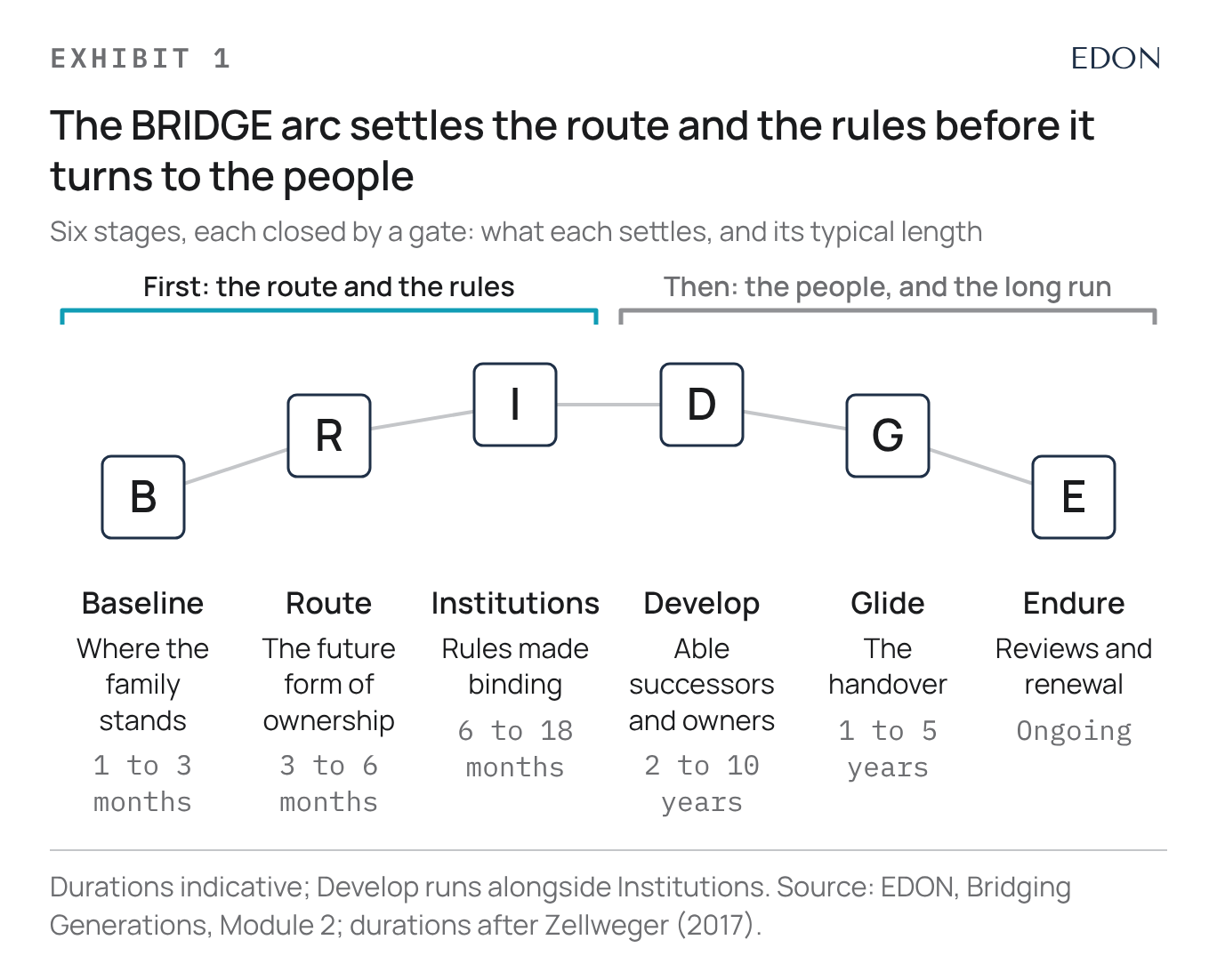
Exhibit 1. The BRIDGE arc settles the route and the rules before it turns to the people.
Read two modules first: Orientation, then the BRIDGE arc. Then take stock with the Baseline (Exhibit 2). If the family has no written emergency plan, make that the first job of the month: who acts if the leader is suddenly lost, with what powers, and an up-to-date will.
After that, work stage by stage. Each module explains one stage, shows it at work in the Arlens, a fictional industrial family that runs through the toolkit, and points to its templates: fifteen in all, in Word and Excel, ready to fill in. Owners and board members can read a module in about 20 minutes from its opening slides and the case; advisers will use every slide and template. Come back to the Baseline every year, and to the family's rules every five.
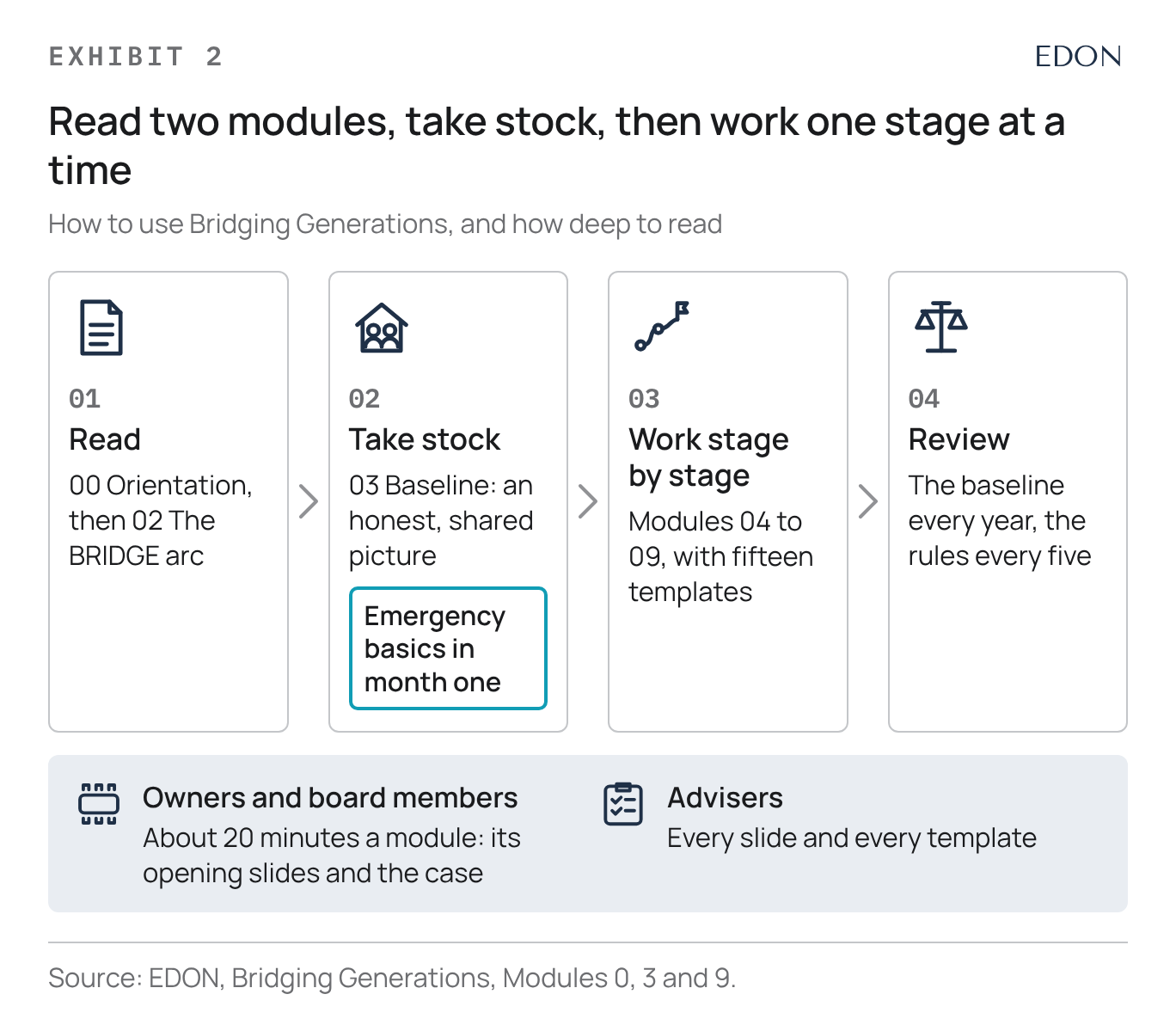
Exhibit 2. Read two modules, take stock, then work one stage at a time.
Much of the work belongs to the family alone. No adviser can decide for them what fair means, or who counts as family. Outside help earns its fee at a few points (Exhibit 3). It matters most in Institutions, where a lawyer turns the family's rules into a shareholder agreement and articles, a facilitator helps two generations draft a constitution, and independent directors join the board. It matters as much in Glide: a neutral party runs the choice of successor; valuation and financing advisers close the gap between what the owners ask and what the successor can pay; and lawyers and tax advisers settle the transfer.
Elsewhere the need is lighter: a facilitator when the generations read the baseline differently, an outside view of the ownership options, mentors from beyond the family, and a mediator if a dispute starts to climb. If you are unsure which stage your family is in, a free 30-minute sparring session with EDON (opens in a new tab) is a quick way to test it.
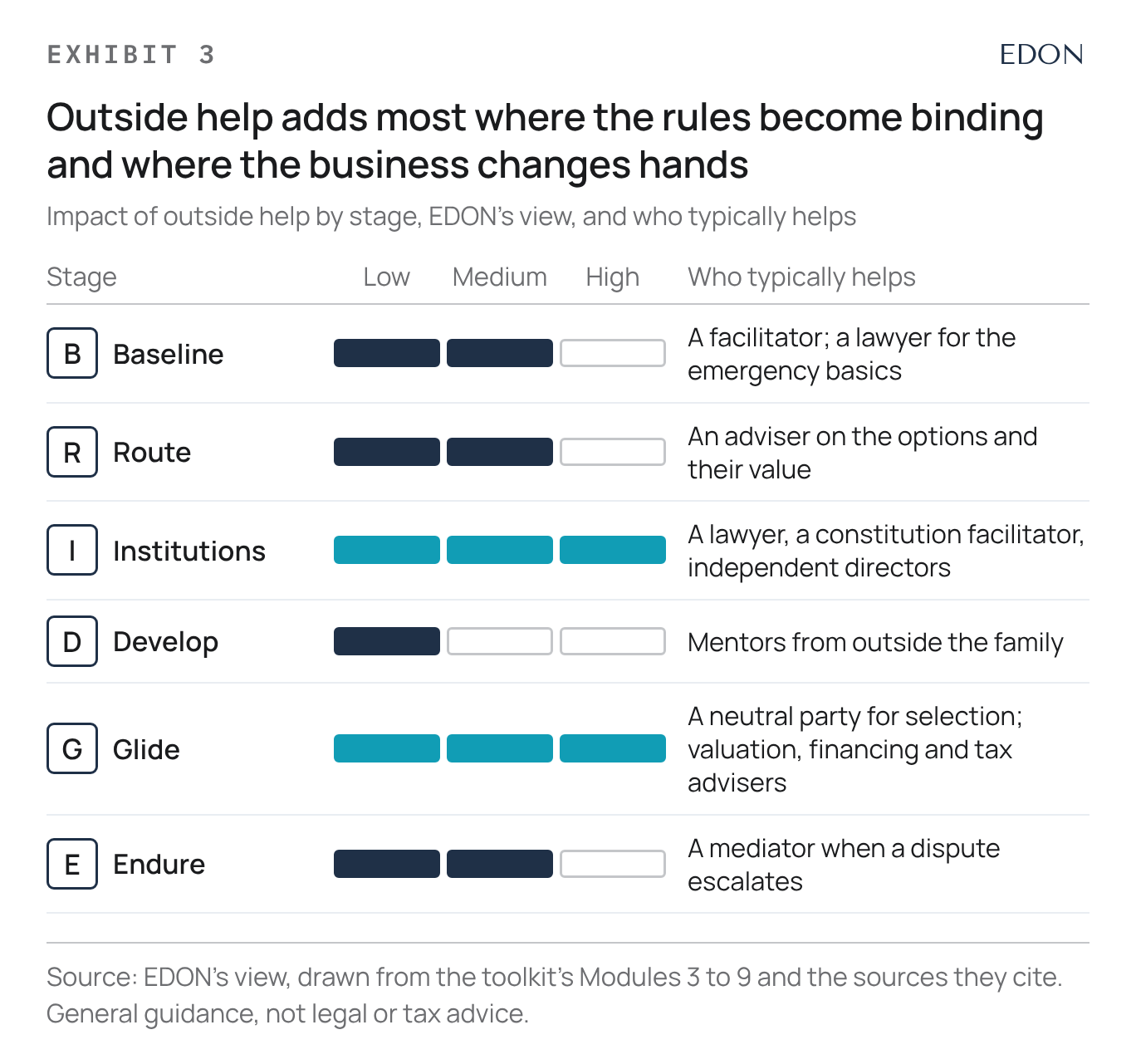
Exhibit 3. Outside help adds most where the rules become binding and where the business changes hands.
When a dispute is already with lawyers, or a buyer is at the table with a deadline. Then the family needs its lawyers and deal advisers first; the toolkit helps afterwards, to rebuild the rules. It gives general guidance, not legal or tax advice: every rule that must bind goes past the family's own lawyer. And if the business is also in a turnaround, read succession in a turnaround before you start.
Decide who reads the first two modules and when the family meets to agree its baseline. That meeting is the real start of a succession. The modules and templates are free on the toolkit page, and the files download straight after a short form.
If this is on your desk right now, EDON offers a free 30-minute sparring session, with no obligation.
Related


Resources for this capability
Six stages, from an honest baseline and an emergency plan to the reviews that keep the handover standing. Free to read.
